Seminar on Human Experience in a Generated World. 4 Sessions June, July 2026, Meta, NYC.
Following my January talk, The Phenomenology of Computation, I developed a four-session seminar at Meta NYC to continue investigating how we experience and live in an increasingly computed world.
The seminar brought together engineers, researchers and designers to discuss computational models, synthetic results, atmosphere and the ways technological systems shape our everyday experience.
Across the four sessions, we had 5 to 15 participants in person, 20 to 30 online, and between 147 and 280 recording views per session. I prepared slides with definitions, diagrams and examples to establish a common vocabulary and test the concepts through discussion.
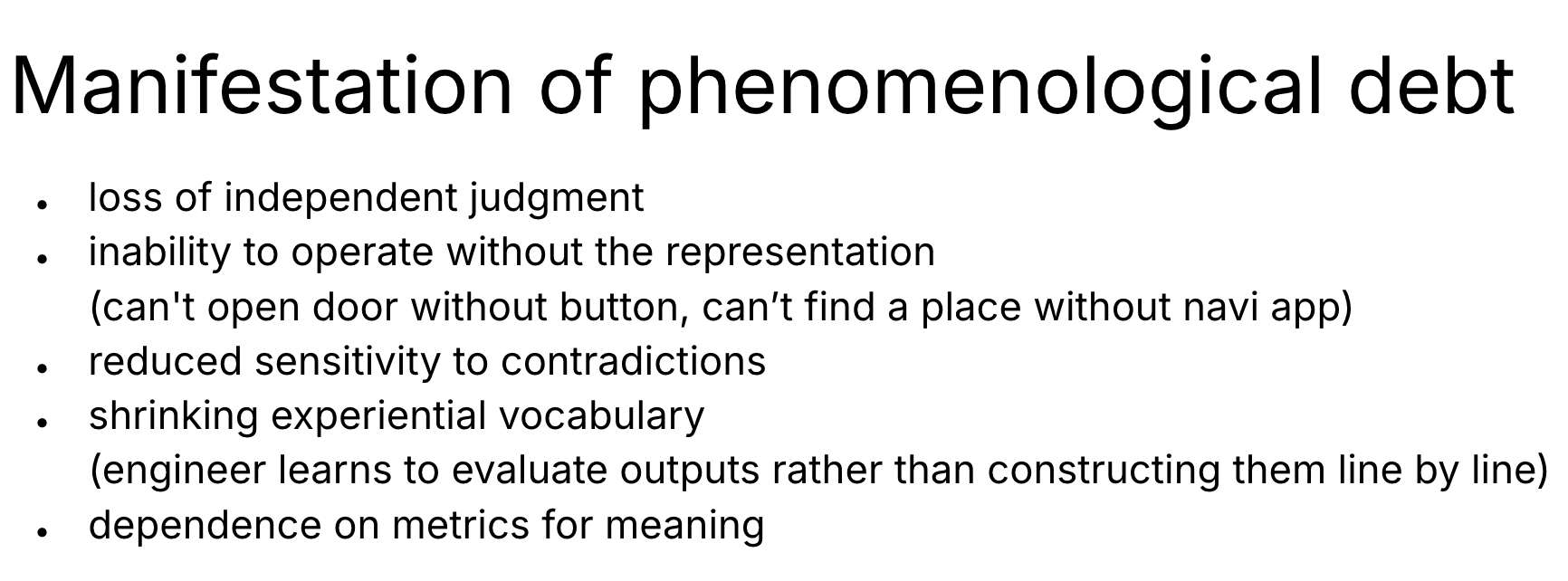
Phenomenological Debt
One of the central concepts was Phenomenological Debt.
Similar to technical debt, phenomenological debt describes the accumulation of consequences from technological design decisions that distance people from the conditions shaping their experiences.
We explored how to identify this debt in technological systems and how design decisions might reduce it, moving toward more authentic, human-oriented experiences.
Four Atmospheres
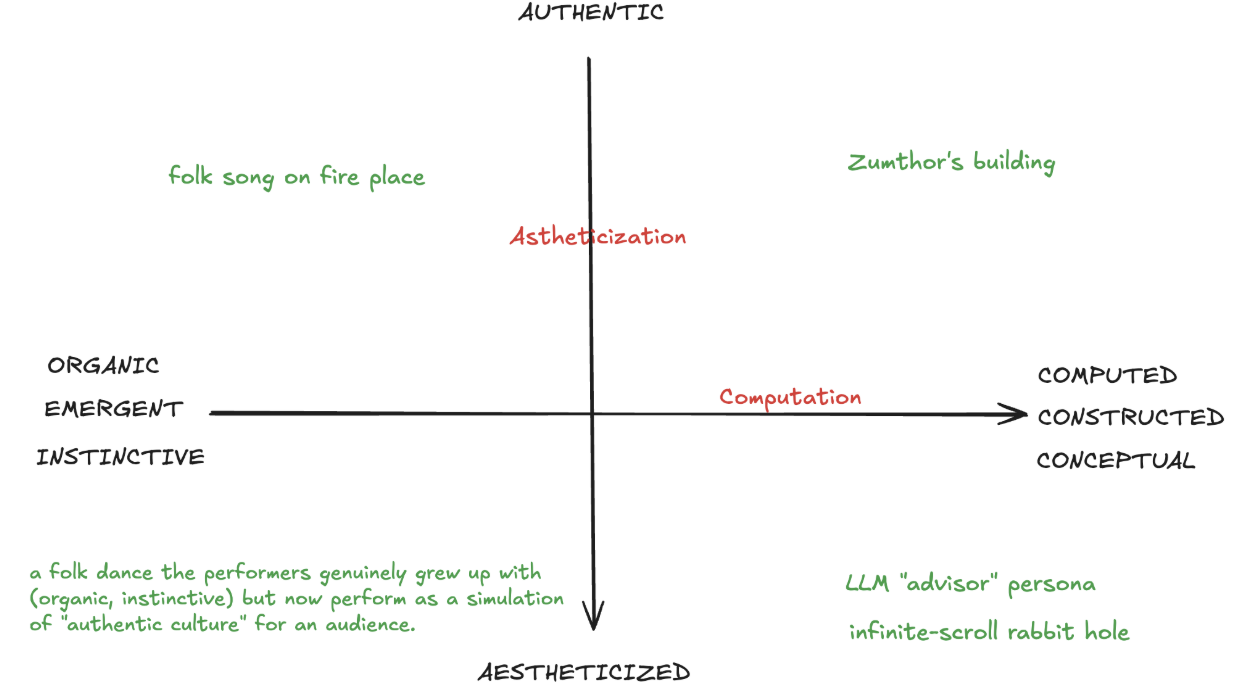
The original talk distinguished between the organic and the computed. For the seminar, I introduced a second axis: authentic and simulated.
This produced four atmospheres:
Authentic and Organic
Authentic and Computed
Simulated and Organic
Simulated and Computed
The framework helped us compare technological experiences, examine their benefits and costs, and investigate which design decisions contribute to each atmosphere.
Being with Technology
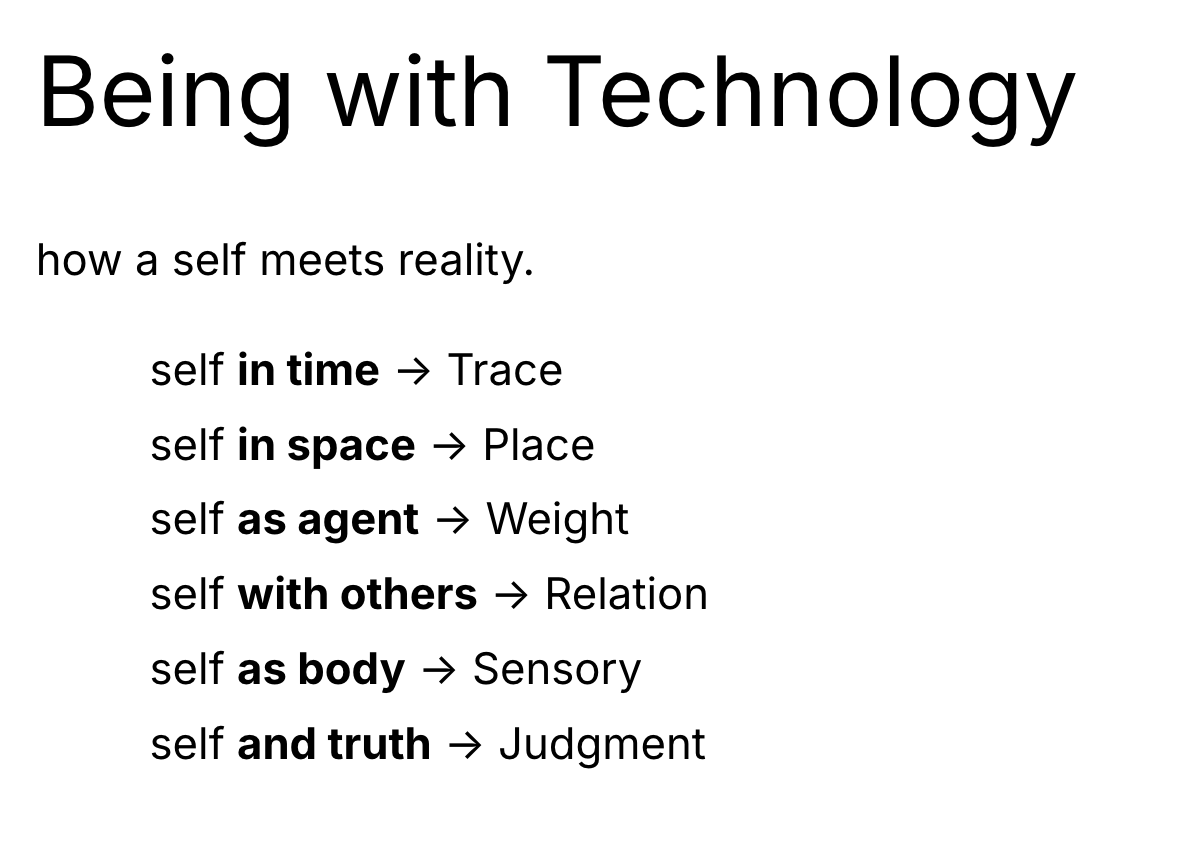
I also developed six dimensions for discussing how technology supports or undermines our experience of being in the world.
DimensionExperienceTraceSelf in timePlaceSelf in spaceWeightSelf as agentRelationSelf with othersSensorySelf as bodyJudgmentSelf and truth
These dimensions allowed us to examine specific technological artifacts and discuss how design decisions influence our relationship with them.
With those definitions we could then discuss specific technolgoical examples and artifacts what supports/hurts the self on each of those axis, which design decisions lead there.
Feedback and Discussion
The seminar received 22 survey responses. Participants reported that afterward they could:
77% identify a system's atmosphere.
59% weigh the benefits and costs of different atmospheres.
59% recognize where a system incurs phenomenological debt.
63% propose design decisions that make a system more computed while remaining authentic.
The discussions also revealed edge cases and contradictions in the framework. These became particularly interesting to me, as they raised questions that the initial definitions could not fully resolve.
Continuing the Research
The seminar helped me move from introducing concepts toward testing their usefulness and limitations.
I am continuing this investigation at NYU Tisch and NYU Comparative Literature classes as part of Samuel Weber’s Seminar on the Uncanny where I will develop the theoretical questions alongside artistic and material projects.
Rather than treating the framework as complete, I want to use the contradictions that emerged as a starting point for further research.
Read the recaps from all four sessions
I am considering sharing recordings publicly but still need to edit sections to pass clearance requirements.